


This is the place to find answers to questions about working with clients, Simple Practice, Autonotes, Availity and more as well as links to continuing education and trainings
Job Descriptions
Job Description Graduate Student Intern:
Conduct comprehensive initial assessments and develop accurate diagnoses using DSM-5 criteria;
Maintain adequate caseload to meet individual school requirements;
Create individualized treatment plans with clear, measurable goals, incorporating evidence-based therapeutic modalities such as DBT, and mindfulness;
Provide individual, group, family, and couples therapy to address various mental health concerns;
Regularly monitor and adjust treatment plans based on client progression;
Provide crisis intervention and support, implementing safety plans when necessary;
Maintain accurate and timely clinical documentation in compliance with policies and regulations;
Complete all Client documentation (Progress Notes, Treatment Plan, documentation of contact with Client, etc.) within 14 days after the session or event;
Uphold confidentiality and professional boundaries, adhering to HIPAA and ethical standards;
Schedule and attend regular supervision meetings to discuss cases and receive feedback;
Monitor and track all own client hours and supervision hours to ensure school requirements are met;
Participate in ongoing professional development and stay current with the latest research and practices;
Complete Hakomi training prior to or concurrently to your contracted time with the clinic;
Work collaboratively with other clinicians to ensure comprehensive client care;
Participate in team meetings and case conferences; and
Advocate for clients and help them navigate systems of care.
Job Description Registered Associate:
Conduct comprehensive initial assessments and develop accurate diagnoses using DSM-5 criteria;
Maintain a minimum caseload of 15 sessions per week;
Create individualized treatment plans with clear, measurable goals, incorporating evidence-based therapeutic modalities such as DBT, and mindfulness;
Provide individual, group, family, and couples therapy to address various mental health concerns;
Regularly monitor and adjust treatment plans based on client progression;
Provide crisis intervention and support, implementing safety plans when necessary;
Maintain accurate and timely clinical documentation in compliance with policies and regulations;
Complete all Client documentation (Progress Notes, Treatment Plan, documentation of contact with Client, etc.) within 14 days after the session or event;
Uphold confidentiality and professional boundaries, adhering to HIPAA and ethical standards;
Schedule and attend regular supervision meetings to discuss cases and receive feedback;
Monitor and track all own client hours and supervision hours to ensure Board requirements are met;
Participate in ongoing professional development and stay current with the latest research and practices;
Complete Hakomi training prior to or concurrently to your contracted time with the clinic;
Work collaboratively with other clinicians to ensure comprehensive client care;
Participate in team meetings and case conferences; and
Advocate for clients and help them navigate systems of care.
Re: Religious trauma

The Golden Thread: Insurance Documentation Presentation

Conact information for claims and reimbursement rates

Christine availity demo (add video)
List of Our Providers
FAQs
Your First Client
Once you receive the contact info for your client, reach out to them to schedule a 15 min phone intake session. During/ after the session you can decide if this is a good fit, and if it is, set up a profile for them in Simple Practice and schedule your 1st session. Make sure to inform the admin team that you are starting with a new client and check in with your supervisor to prepare. Your first session is a good time to review the intake docs and begin taking a history with your client, making sure you understand the story behind what is bringing them to therapy at this time.
Phone Intake Process
Call or email with your new client to schedule a brief call to complete the initial intake form in Simple Practice. The form will guide you through the conversation, but it is also a chance to answer their questions, explain the clinic process, as well as how you like to practice and your philosophy. If you decide not to move forward with the client, please let veronica knows so she can refer them to another clinician.
Terminating a client
If therapy has come to its natural end, then make sure to schedule a final session to reflect on the span of work together and progress made. This is a precious and important time to acknoweldge what you’ve done together. If the client has done something to contraindicate therapy at this time, talk with your supervisor about next steps and referring them out. If you are no longer able to continue therapy, try to leave about 3-4 weeks to process therapy coming to an end and transitioning the client in whatever way feels supportive. In any case, make sure to note in their file that you are no longer their therapist-on-record and you have made every attempt to communicate that to the client in a way they can understand.
Writing Progress Notes
Auto notes is an easy way to create a MTPNW SOAP note following every session. Progress notes must be written within 24 hours following a session. Please keep them general to protect your client, as these are part of their clinical record for insurance purposes and best practice. Check with your supervisor on the best way to include Diagnoses and Track Progress to maximize their opportunity for care.
Can you see in Simple Practice that a client’s claim has been paid but you have not been paid for the session? or were you paid more than once for a single session?
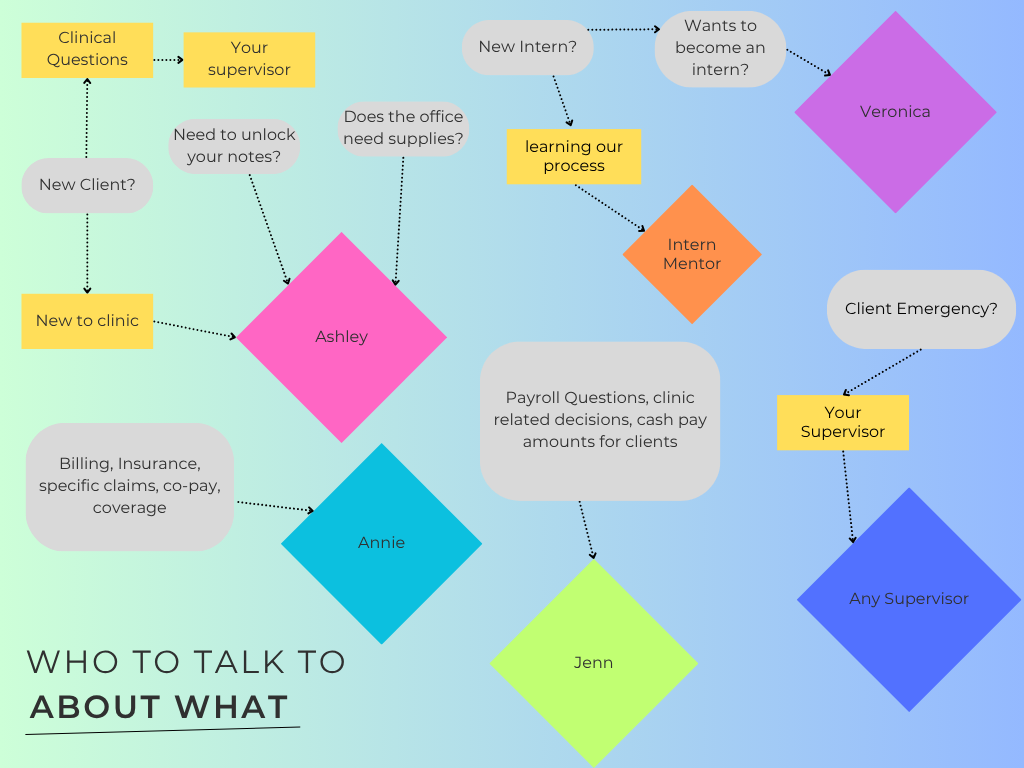
Reach out to Jenn to handle all issues regarding payroll
Scheduling In-person sessions
Make sure that you have booked a chunk of time in one of the offices at the clinic first, then you may schedule anytime within your booking window. Please refer to the clinic manual for office procedures.
When your client already has an email in Simple Practice
After a chat with SP support I have an answer for creating a couple using an existing client and their contact (with the existing email address). These are the steps I just successfully followed:
1. Navigate to your client and contact list and select the existing client you want to use for the couple.
2. Click the Manage (•••) button on the right and select Add this client to a couple.
3. Select the Client Type option of Couple and you will see a great box with "Add existing client or contact" button appear beneath the Client 1 and Client 2 boxes. Click it for Client 2 and you'll be able to type in the name of the existing client/contact person you want to add.
From there is creates the couple and navigates you to the share documents page. Or just have them use/create another email.
Diagnosis Considerations
Be aware that diagnoses stay on someone’s medical record and as client advocates it’s important to be discriminating in making sure that the diagnosis maximizes care and advantages the therapy as well as meeting the needs of an insurance claim. Defaulting to Adjustment Disorder is sufficient for coverage until you have more understanding of a client to be more specific. Be wary of the specificity of a diagnosis that may prohibit care or coverage, or create a disadvantage for a client if someone were to request their records in court or otherwise, especially in the case of SMI.
Preparing for Time-Off
Make sure to give your client as much notice as possible, generally no more than 1 month is necessary/minimum 2 weeks, if you are planning to be absent from sessions. Make sure that you have found someone who can help to cover your clients for those needing continued care while you are gone and help facilitate connecting them. Most clients are comfortable with notice, but sometimes it is best to encourage clients to have a check-in 30-60 min session with another therapist at the clinic who has already agreed to cover your client. You may also refer them to your supervisor in a pinch. Also make sure to set an away message with emergency numbers for reference and when to expect your return.
Transferring Clients/ Referring them out
When your internship is through, or you’ve decided together that the client needs the care and expertise of another clinician, it is good practice to offer a few referral options to help with locating a new clinician unless they’ve specifically asked you not to and prefer to find their own care. You may offer clients at least one, maybe three possible clinicians to meet their needs for care and you may offer to speak with their new clinician or share records with a ROI to support continuity of care. Check out the referrals page for options.
Treatment Plans in Auto Notes
When you’re building a treatment plan from a session with a client, you may choose to directly quote their goals for treatment - up to 3 - knowing that you will need to update their Dx and Tx Plan every 3 months for insurance purposes. Please note that it may stay the same, but it is good to make at least a small adjustment each update. Be generous in your Dx strategy on the initial Tx plan and make sure that you add a few objectives to each goal. Make sure to note the correct pronouns for the client. Then copy and paste the Treatment Plan into the MTPNW Diagnosis and Treatment Plan template in Simple Practice.
How do I get keys to the office?
There are spare keys in the drawer in the hallway at the office. Please coordinate with someone who is there to meet them for a key.
Resources for Continued Education
-
PESI
Live seminars, online classes, CEUs
-
ECARE CONTINTUING ED
-
Psychotherapy Networker
-
Psychwire
Online courses for health and mental health professionals (ACT, CBT, DBT, Motivational Interviewing, EFT)
-
Hakomi Institute
Hakomi specific events, programs, and practitioners
-
Oregon Friends of Jung
Lectures, events, workshops, and a local library!
-
Portland DBT INSTITUTE
DBT trainings, groups, clinicians
-
Oregon Psychoanalytic Center
MEMBERSHIP BASED: psychodynamic trainings, supervisors, and lectures
-
Lewis & Clark CEUs
Classes and workshops